
Knowledge
How to choose the right transparency
Transparency affects daylight, views and privacy. See which factors to assess before the textile is chosen.
Short answer
Choose transparency from the function of the room, not from the sample folder. First clarify what the textile must solve — filter light, reduce view-in, keep the view out, or several things at once. Then assess large samples in the room's own light at different times of day, and document the chosen quality so the delivery can be checked against a shared basis.
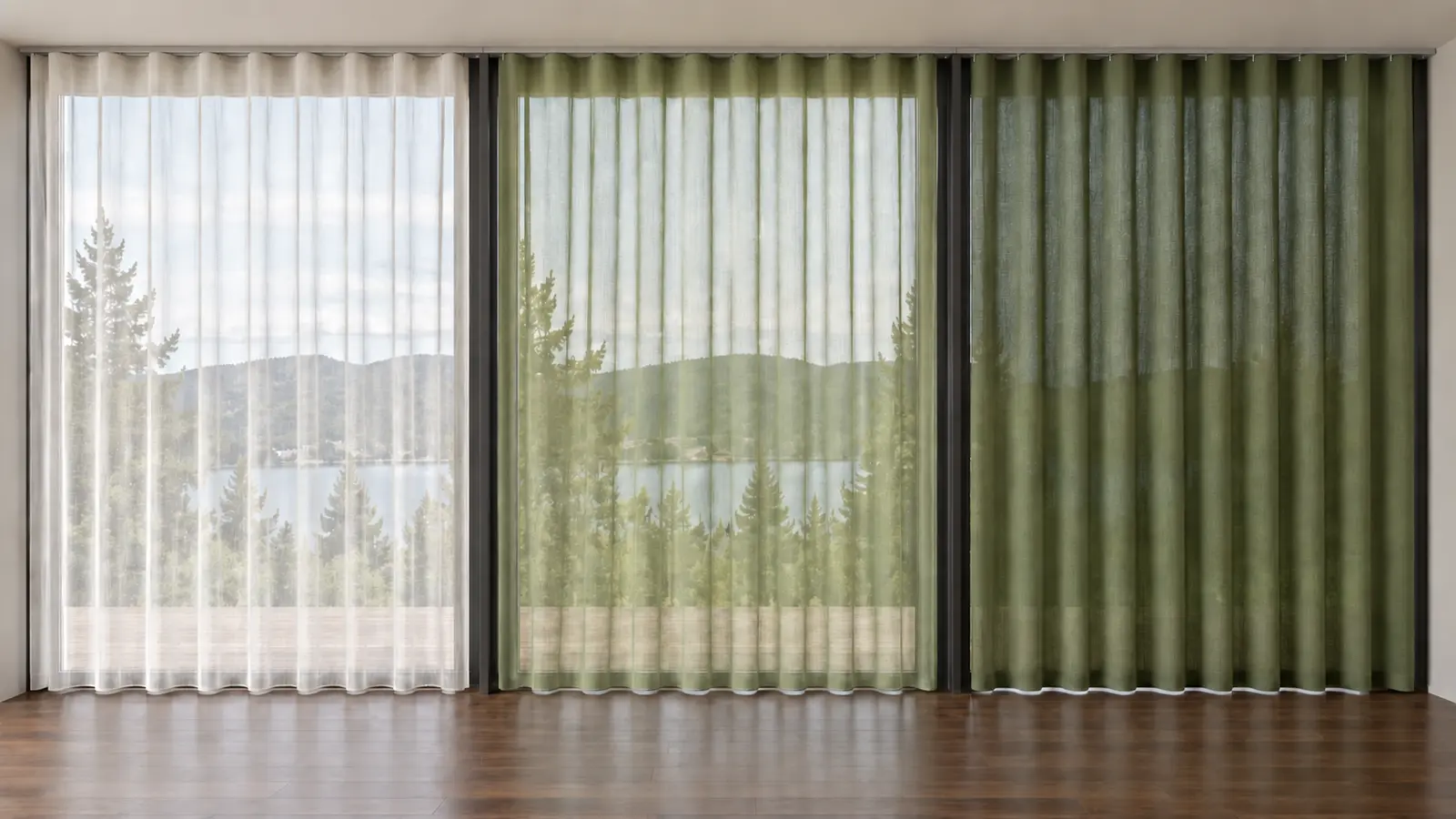
Transparency is not just a number
A textile's openness is shaped by weave, thread thickness, colour and density. The experienced result also depends on the light difference between the two sides of the room. During the day a bright room may keep its view towards a darker facade, while the situation can reverse in the evening when the lights are on inside.
Two qualities with the same description can therefore feel completely different in the same room. This is one of the most common causes of disappointed expectations when textiles are chosen from a data sheet or a small swatch alone.
Start with the function of the room
Clarify first whether the purpose is to filter direct light, reduce visual restlessness, create privacy, keep the view — or combine several needs. A meeting room, a workstation and a hotel room do not require the same balance.
In many projects the answer is a layered solution: a transparent layer for daytime and a denser or blackout layer for situations where the room must be screened. That places demands on the track system and should be part of the decision from the start.
Assess the sample in the actual light
Small samples can mislead. View as large a piece of textile as possible in front of the relevant window and assess it at different times. Colours close to glass can appear different from the sample folder.
Assess both the day situation and the evening situation with artificial light if privacy is part of the need. The light balance reverses when it gets dark outside — that cannot be seen on a swatch in the hand.
Checklist before the choice
- The room's functions and needs are described per room type
- Priorities between daylight, views and privacy are clarified
- Large samples assessed in the room's own light — day and evening
- Need for supplementary layers (blackout, screens) clarified
- Fire requirements and documentation for the use verified
- Cleaning and maintenance of the quality assessed
Document the decision
Record the chosen quality, colour, width, fire classification, maintenance and the approved sample basis. This reduces the risk that the delivered result is judged against different expectations.
Frequently asked questions
Can different levels of transparency be combined in one room?
Yes. A sheer curtain can be combined with an opaque or blackout curtain on a multi-track system, allowing daylight, privacy and room darkening to be adjusted as needed.
Why does the same textile feel different in two rooms?
Differences in daylight, window position, room depth and surrounding colours change how the fabric appears. Assess samples in the actual room in both daylight and artificial light.
How large should the samples be?
As large as practically possible — ideally a large sample hung at the relevant window. Small hand samples work for colour and texture, but not for judging daylight, outward views and privacy.
What should be documented once the choice is made?
Record the fabric name, colour, width, any relevant fire classification, maintenance instructions and approved sample, so the completed installation can be checked against what was agreed.
Do you have a specific project?
Upload the material or book a project review with CIS Nordic.