Solution
Motorised curtains and control for commercial buildings
Comfort, precision and coordinated control.
When motorisation makes sense
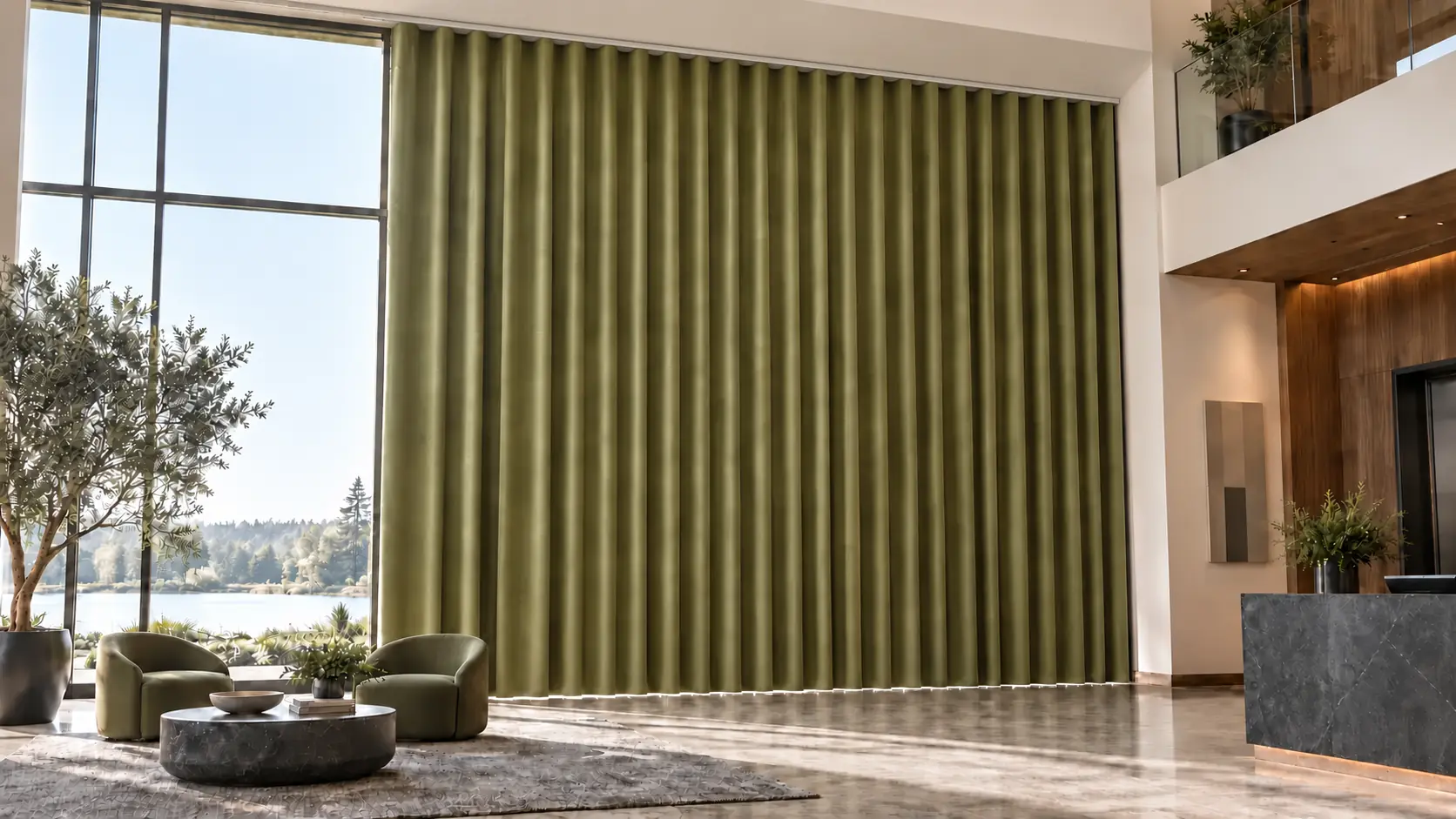
Motorisation is relevant for tall or hard-to-reach bays, heavy solutions, frequent daily operation, many units, or the need for scenes and central control. Daily use becomes easier and more consistent, and the textiles are spared manual strain.
The decision should rest on total cost: motorisation costs more to establish, but can give easier operation, more consistent use and longer textile life. Installation, operation, service and expected use are weighed together before the choice is made.
Typical applications
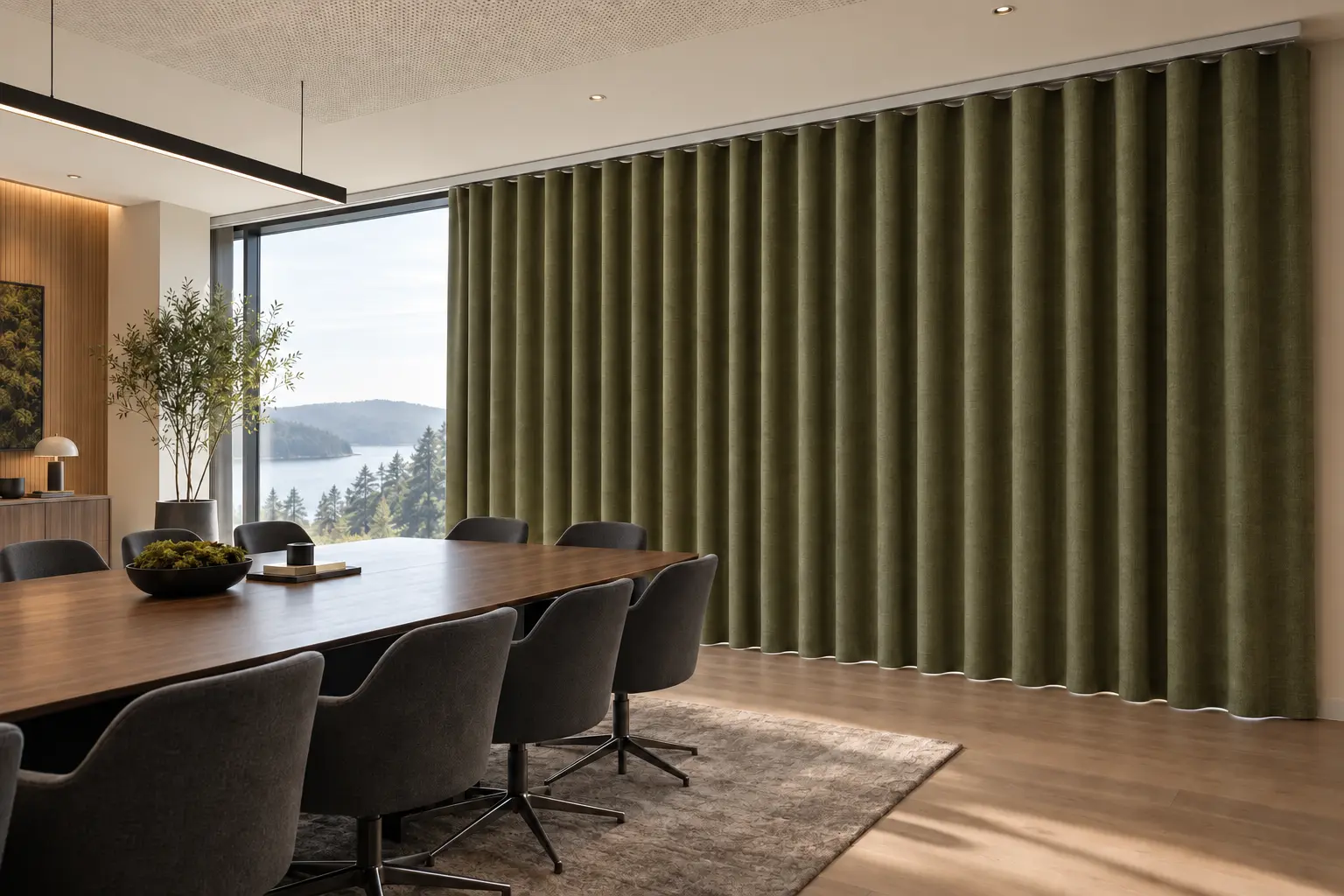
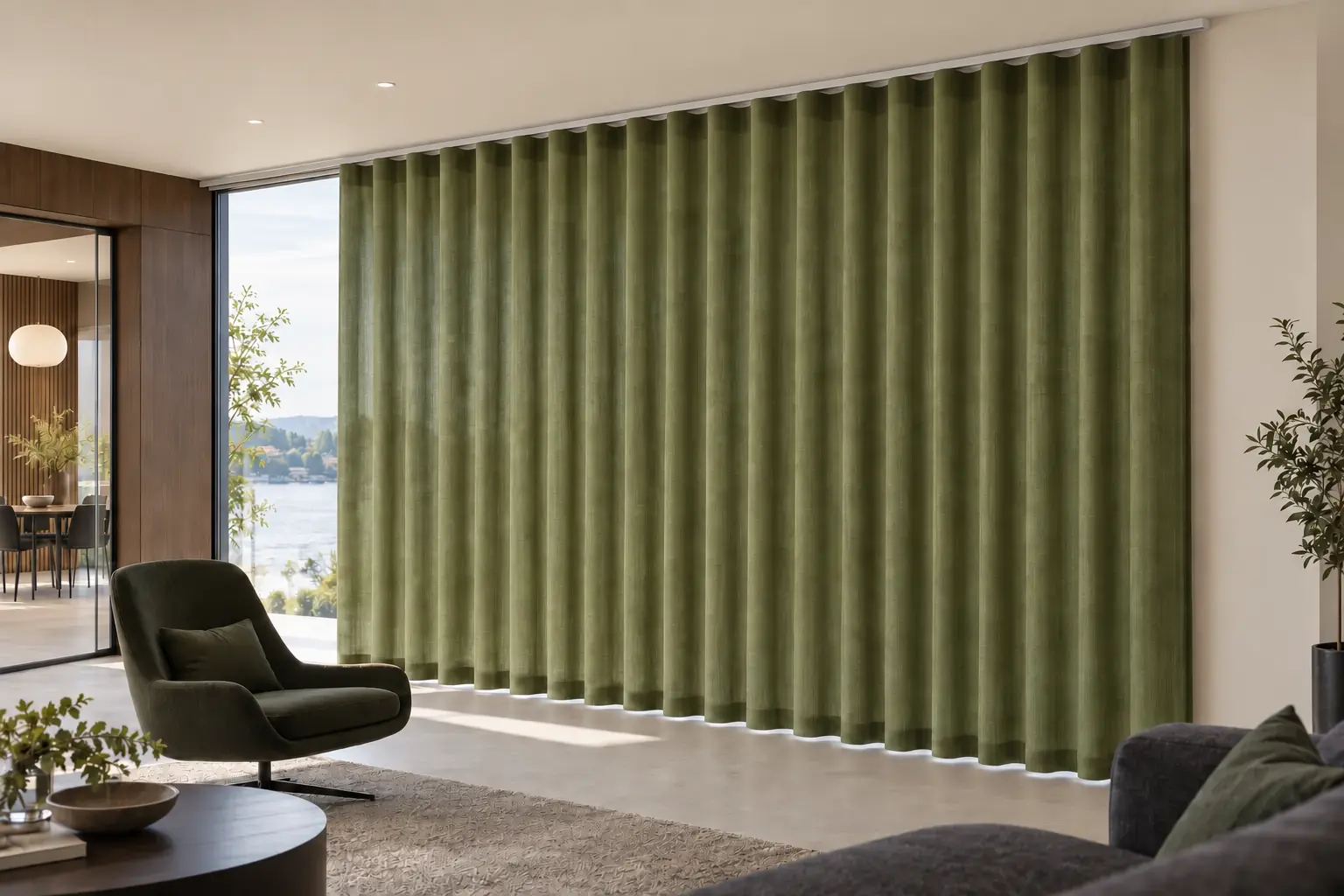
Motorised solutions are used in, among others:
- Double-height foyers and atriums with tall glazed bays
- Boardrooms and presentation rooms with fixed light and AV scenes
- Hotels with centrally controlled common areas
- Teaching and conference rooms with projection
- Buildings with many identical units, where central control eases operation
What we clarify
- Operating form: wall switch, remote, app, schedule, sensors or building management
- Number of units, grouping and scenes
- Motor choice against textile weight and bay size
- Power supply, cable routes and motor position
- Service access and replaceability
- Division of responsibility between supplier, electrician, automation and project team
Interfaces and coordination
Power supply, cable routes, motor position, control principle, programming and service access typically involve several disciplines. Responsibility and delivery boundaries must be described before ceilings and walls close — this is the most common cause of costly late changes.
Documentation and operation
Control principle, grouping and programming are documented at handover, so the operations team can operate, adjust and service the installation. For building-management integration, the interface and responsibility are described explicitly.
The CIS Nordic role and next step
CIS Nordic clarifies motor choice, power, operation and integration in dialogue with the project's electrical and automation disciplines, and delivers the complete solution including commissioning and documentation. Start with a review of bays, scenes and operational preferences.
Frequently asked questions
Does every motorised curtain require a power supply?
Each motor needs a compatible power connection planned in advance — mains, low voltage or a shared supply, depending on the system — but not necessarily a separate visible socket. Power and cable routes should be coordinated early. Depending on the selected system, the motor can be positioned discreetly at the end of the track and screened by the curtain or a pelmet.
Can motorised curtains be integrated with a building management system?
Yes, depending on the chosen motor and control system. The interface with the building management system (BMS) — protocol, programming, commissioning and maintenance responsibilities — is defined during design.
When is motorisation worth considering?
Typically when operation would otherwise be difficult or frequent: tall bays, heavy textiles, many units or preset room settings. The assessment weighs installation, operation and expected use — not just purchase price.
Can existing curtains be upgraded with motorisation?
Sometimes. We assess track compatibility, curtain weight, space for the motor and available power. The existing track can be retained in some cases; in others it must be replaced.
Do you have a project for us to look at?
Talk to us about the project, or upload the material for a preliminary estimate.