Solution
Curtain track systems for commercial buildings
The right system creates both function and calm.
Systems matched to the project
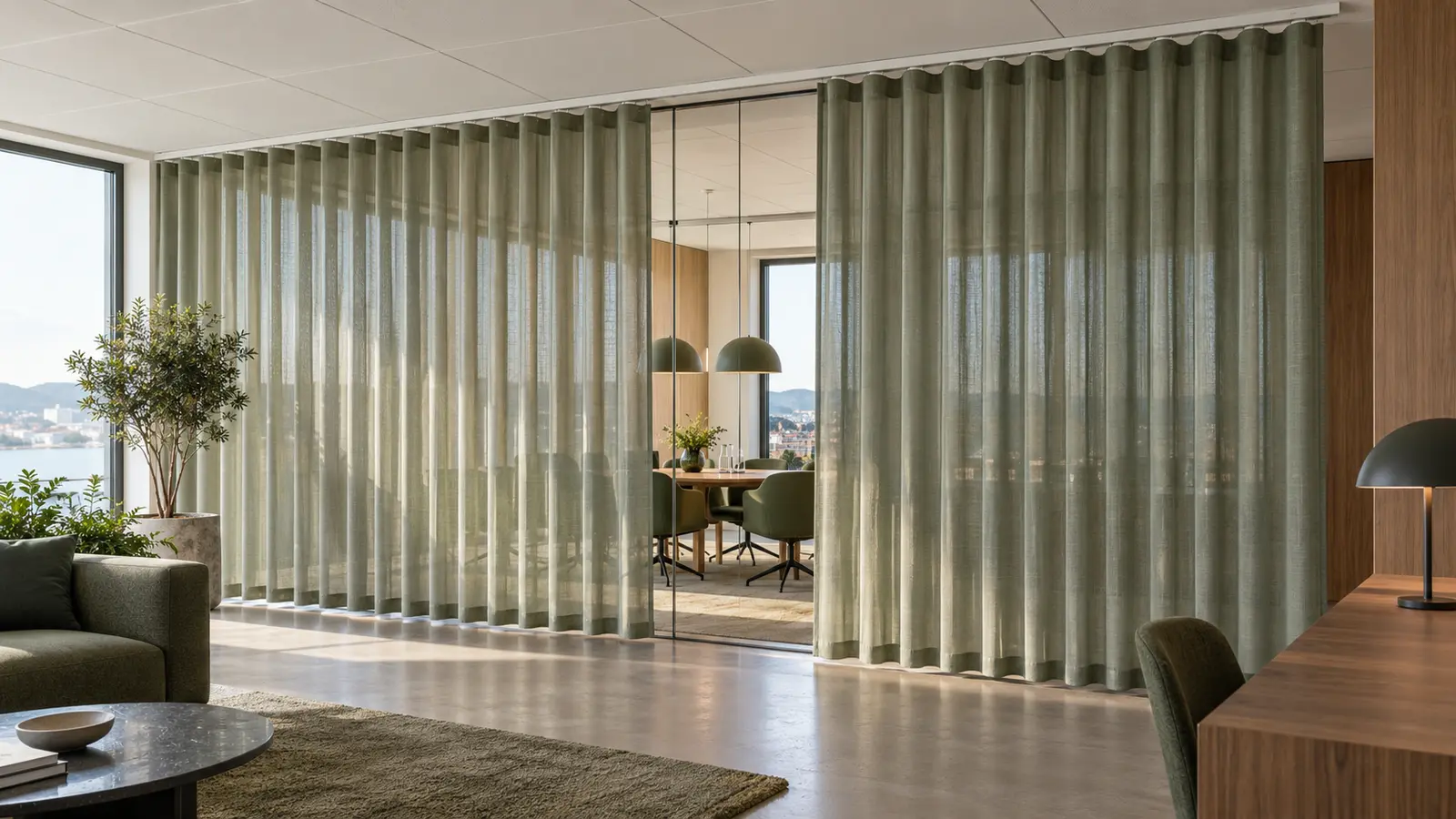
The track determines how the curtain works in practice: how it runs, where it stacks, how much space it takes, and how calm the solution appears in the room. We deliver single- and multi-track systems, ceiling and wall mounting, curved and custom routes, systems for heavy textiles, and discreet integrated solutions.
System choice starts from the weight of the textile, the size of the bay, the desired operation and the detailing that the ceiling and room allow.
Typical needs
Track systems are chosen and detailed differently depending on the situation:
- Concealed integration in suspended ceilings and recesses in new build and renovation
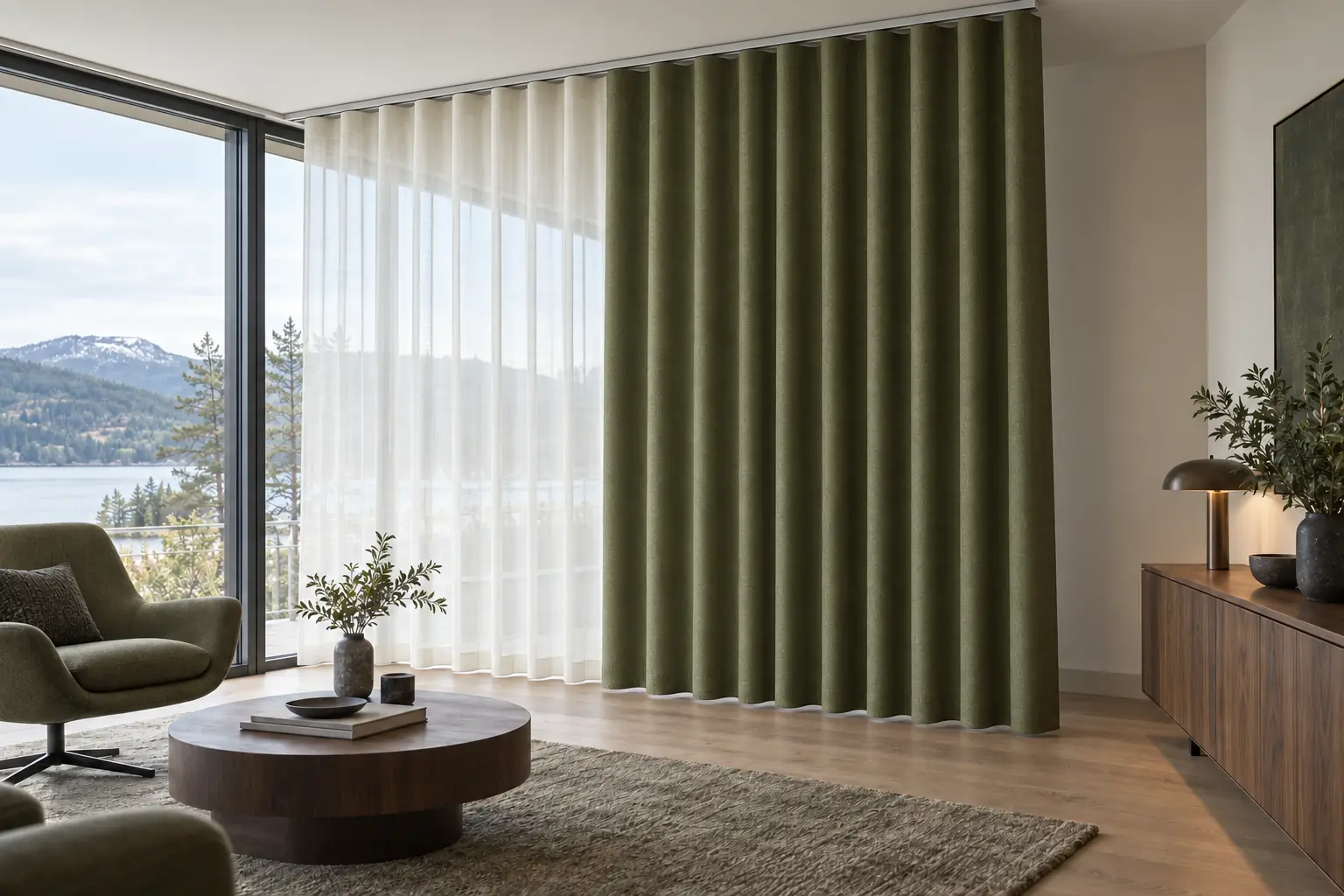
- Multi-track systems for layered solutions with sheer and blackout
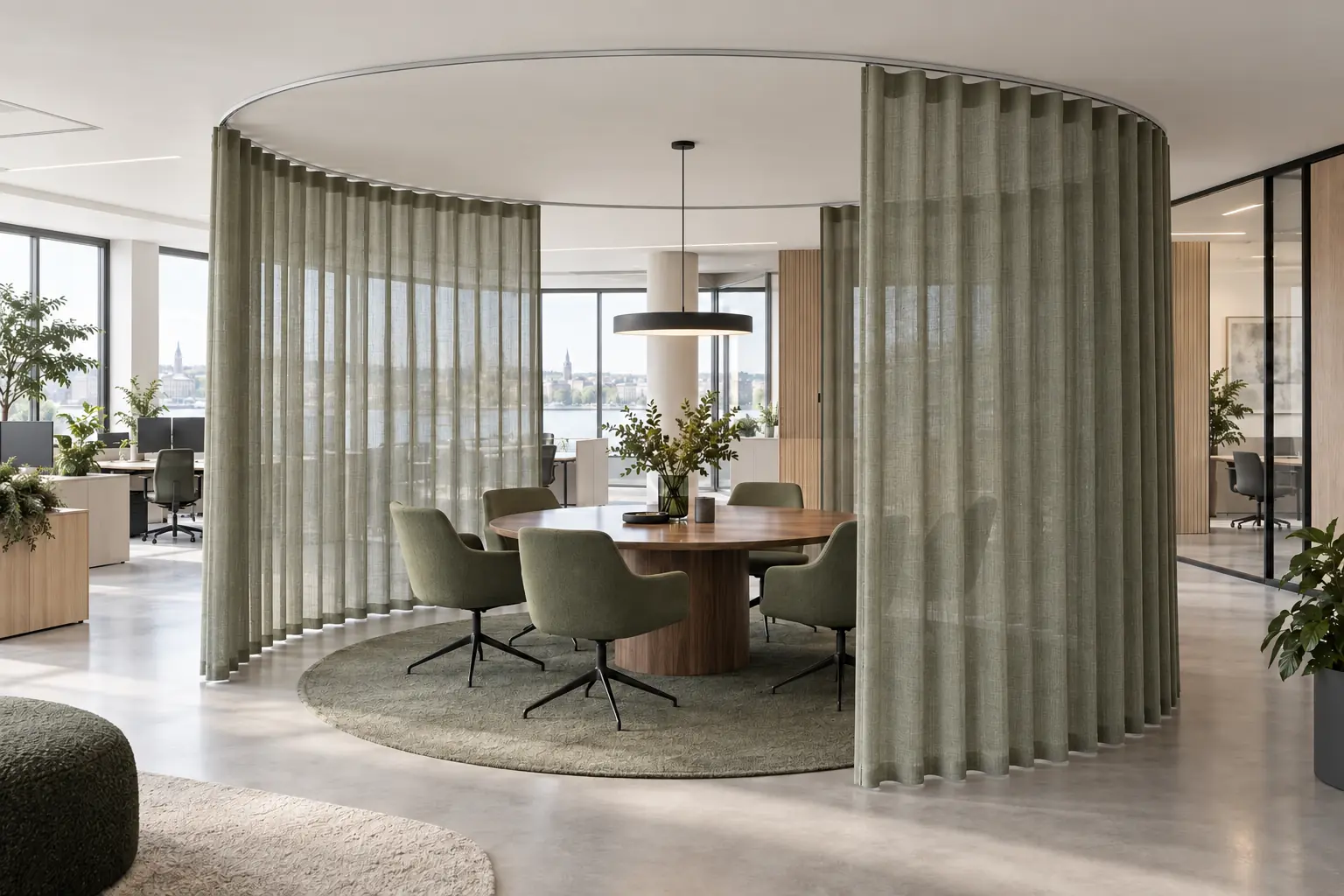
- Curved and custom routes for room division and zones
- Systems for heavy acoustic and blackout textiles
- Wall mounting where the ceiling cannot carry or must not be penetrated
What we clarify at system selection
- Textile weight and the total load on the system
- Manual or motorised operation — now or later
- Number of tracks and panel distribution
- Visible, partly concealed or fully integrated mounting
- Radius and geometry for curved routes
- Access for service, take-down and cleaning of textiles
Early coordination with other disciplines
Installation, fixing, tolerances, service access and any power should be clarified before ceilings close. Ventilation, sprinklers, lighting and acoustic ceilings often compete for the same zones — a clear track line on the drawing makes the interfaces visible. We provide dimensions and solution principles for coordination with the other disciplines.
Documentation and operation
Fixings, system components and operation are documented at handover. Gliders, stops and other wear parts can be inspected and replaced, and planned servicing can contribute to a longer service life for the system.
The CIS Nordic role and next step
CIS Nordic designs the track routing together with the textile choice, supplies the system and handles installation and handover. If the project is in the design phase, a review of ceiling plans and facade sections is the best starting point.
Frequently asked questions
Can tracks be concealed in the ceiling?
Yes, if it is planned early. Recess dimensions, load-bearing support, clearance and service access must be resolved before the ceiling design is finalised. A slim, visible ceiling-mounted track can also be a deliberate design choice.
What if the ceiling cannot carry the load?
The track must be fixed to a structure that can carry the total load. If the suspended ceiling is unsuitable, the system may be fixed to the structure above or wall-mounted. The fixing method is chosen after the substrate has been assessed.
Can a manual curtain system be motorised later?
Sometimes. It depends on whether the track supports motorisation and whether suitable power and service access are available. Preparing for motorisation from the outset usually reduces later alterations.
Can tracks run in curves and special shapes?
Many track systems can follow curves or custom layouts. The options depend on the selected system, curve radius, curtain weight and method of operation, so the geometry should be agreed early.
Do you have a project for us to look at?
Talk to us about the project, or upload the material for a preliminary estimate.