
Solution
Blackout curtains for commercial buildings
Blackout requires more than a dark textile.
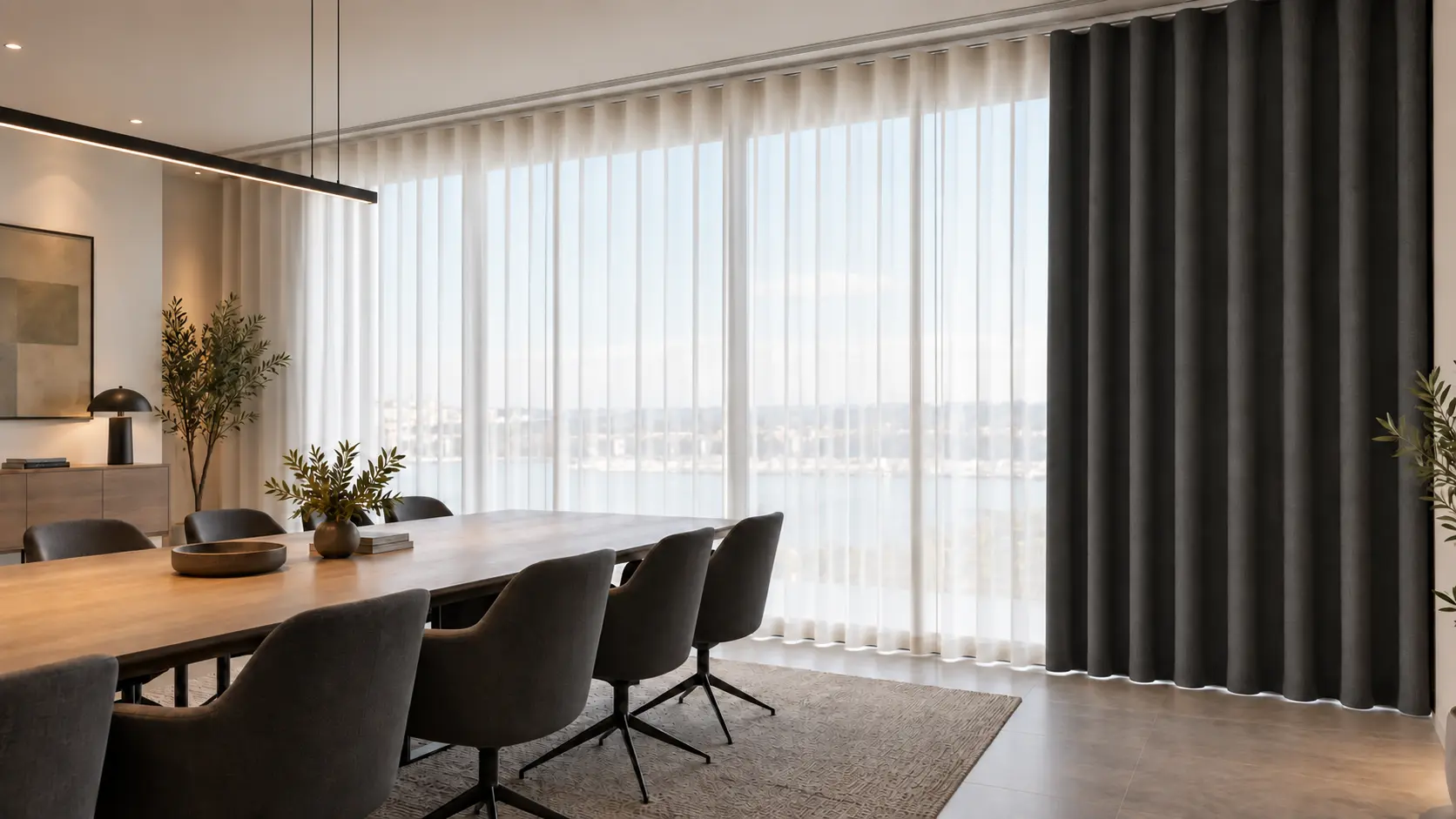
What determines successful blackout
The result depends on the whole: the light-tightness of the textile, the overlap between panels, the closure at sides, head and bottom, the position of the track system, and the surrounding building details. We therefore assess the entire opening — not just the fabric.
The requirement should be described specifically before the solution is chosen. Some rooms only need reduced daylight for presentations; others must be made fully dark for projection, sleep or special activities. The stricter the requirement, the more the details around the opening matter.
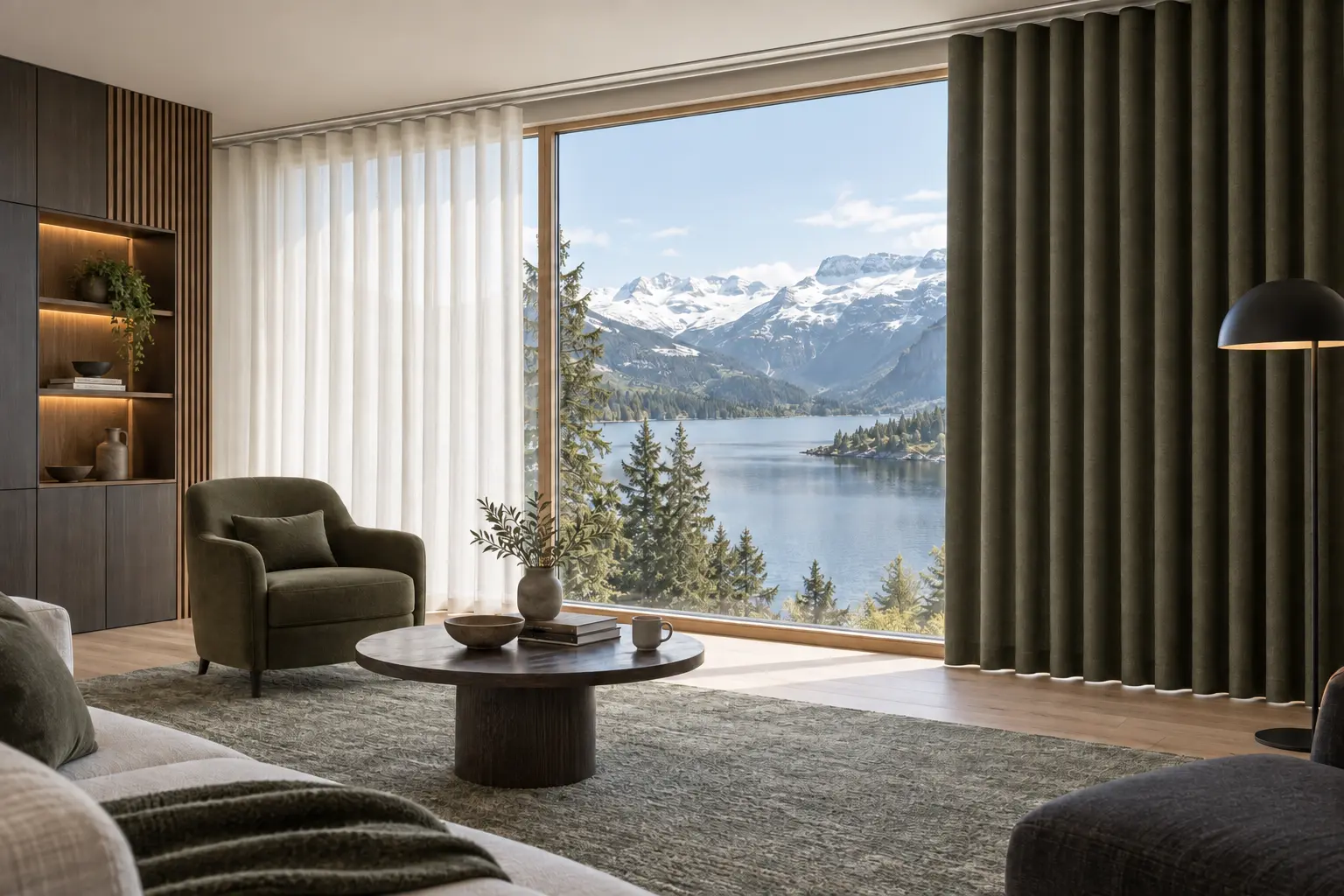
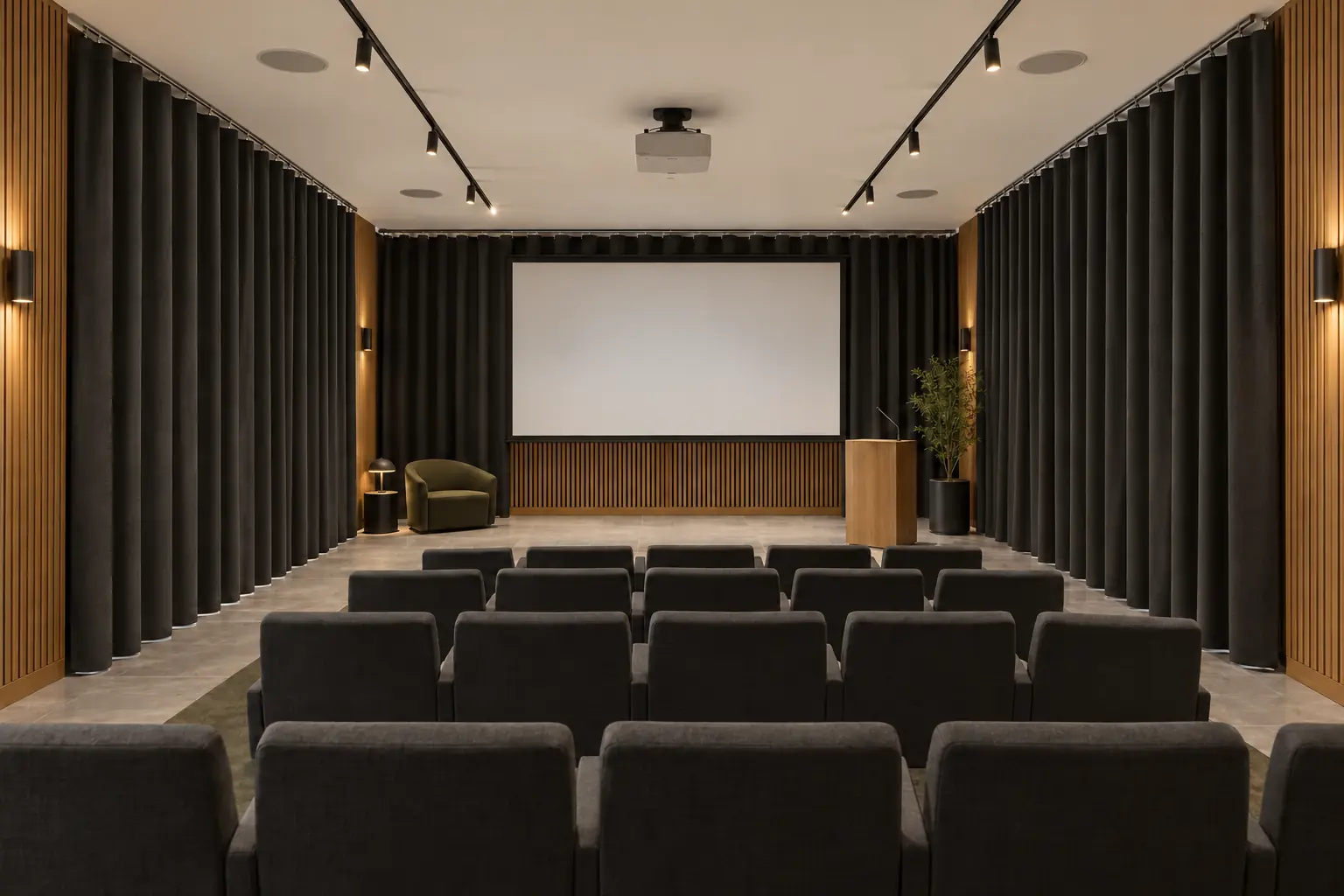
Typical applications
Blackout is part of many professional room types:
- Meeting and presentation rooms with projection and displays
- Teaching rooms and auditoriums
- Hotel rooms, typically as part of a layered solution
- AV, studio and demonstration rooms with strict light requirements
- Rest and on-call rooms requiring daytime sleep
What we assess during design
- The required degree of blackout, described specifically per room type
- The geometry of the opening and potential light gaps at sides, head and bottom
- Panel distribution, overlap and return to wall
- Track position, number of tracks and any pelmet or recess
- Operation — manual or motorised — and daily use
- Combination with a sheer layer for daytime use
Technical coordination
Where requirements are strict, pelmets, side guides and recesses should be incorporated into ceiling and wall details while they can still be influenced. Motorisation requires early clarification of power and service access. For critical rooms we recommend a mock-up, so light gaps can be seen and adjusted before the solution is repeated across many rooms.
Documentation and operation
The agreed degree of blackout, the approved sample basis and the chosen details are documented, so the result can be assessed on a shared basis at handover. Cleaning and operating instructions for the chosen quality form part of the handover.
The CIS Nordic role and next step
CIS Nordic designs blackout as a whole: textile, tracks, details, operation and documentation. If the project includes rooms with special light requirements, an early review of the openings is the most effective next step.
Frequently asked questions
Do blackout curtains make a room completely dark?
Not automatically. A light-tight fabric can still allow light leakage at the sides, top and bottom. Full room darkening depends on the complete installation, including overlaps, side returns, any head box or cassette and, where required, side channels. Verify the result on site.
How is a hotel room blacked out?
Typically with a layered solution: a sheer or semi-transparent layer for daytime and a blackout layer on its own track. The details at the sides and top determine how dark the room actually gets.
Can existing curtain tracks be reused for blackout curtains?
Sometimes. The condition, number of tracks, load capacity and position must suit the proposed blackout solution. We confirm this through a site survey and technical assessment before any new tracks are ordered.
Is motorisation necessary for blackout?
No, but it is often relevant for tall bays, heavy textiles or rooms where blackout is part of preset room settings coordinated with AV and lighting.
Do you have a project for us to look at?
Talk to us about the project, or upload the material for a preliminary estimate.