
Solution
Screens and internal solar shading for commercial buildings
Control the daylight without losing the architecture.
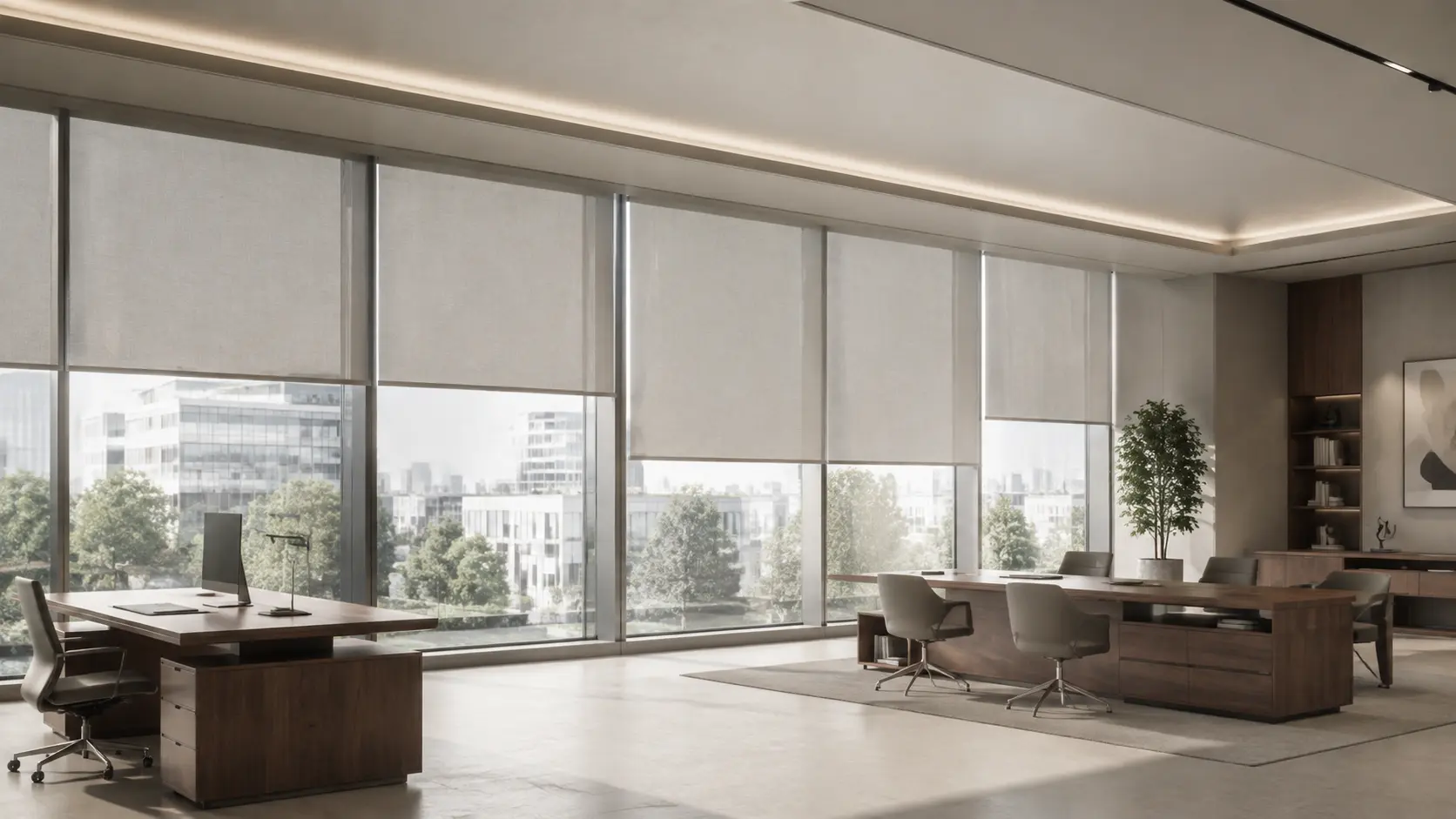
What screens solve
Interior screens provide precise control of glare and daylight at screen-based workstations and in rooms with large glazed areas. They appear calm and uniform in the facade and can be operated individually or centrally.
We advise on fabric types, openness factor, colours, operation and technical systems, and on the interplay between solar shading, facade, indoor climate and the other textile solutions. The colour and openness of the fabric affect views, glare control and light experience alike — the choice depends on orientation, glazing and the function of the room.
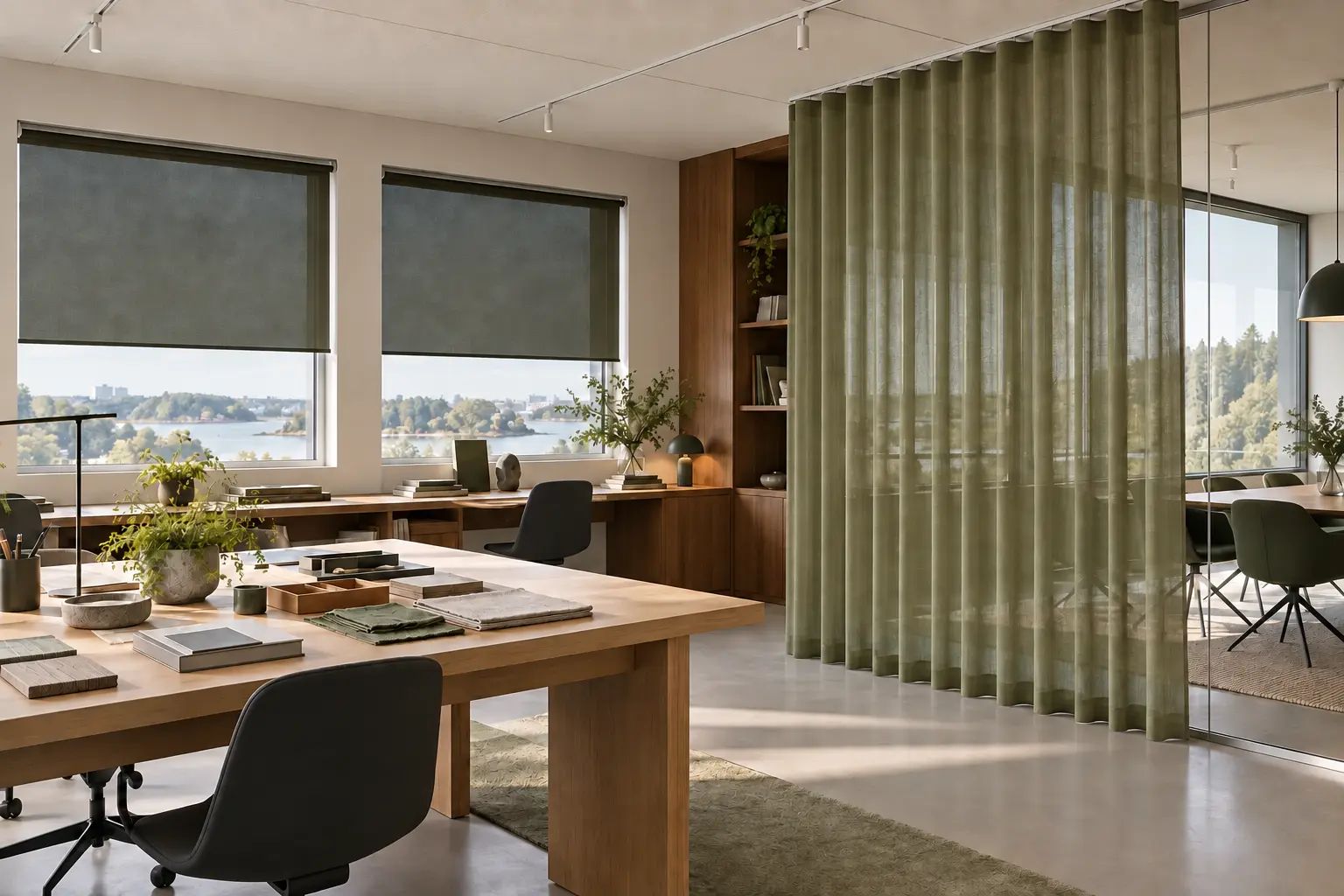
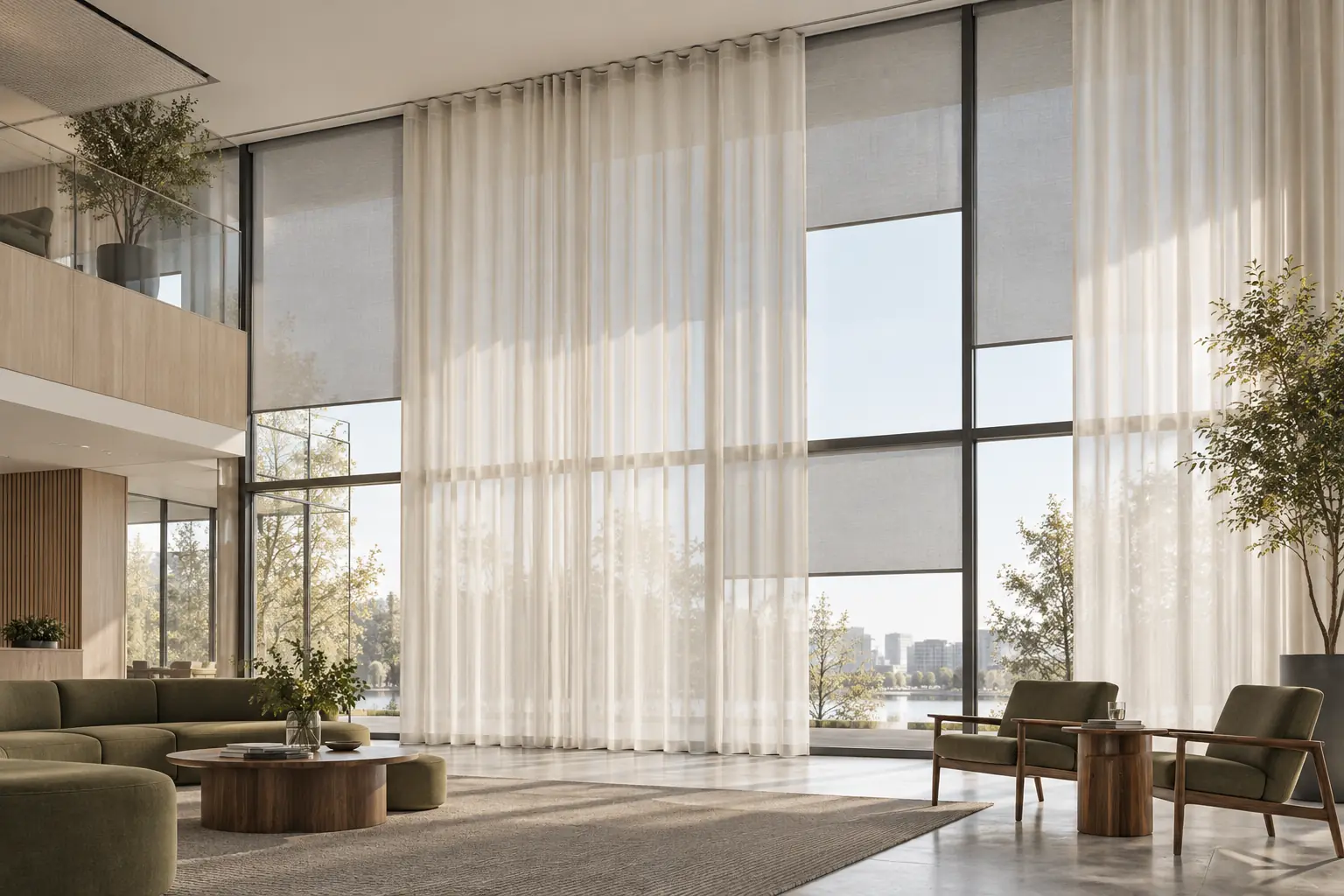
Typical applications
Screens are relevant in buildings where daylight must be controlled precisely:
- Office facades with screen work and changing sun
- Atriums and tall glazed bays needing uniform shading
- Libraries and reading rooms with even, glare-free light
- Teaching rooms with projection and board work
- Meeting centres and receptions where the facade expression must be kept
What we assess when choosing
- Facade orientation, glazing and actual sun exposure
- Work functions and glare-control requirements
- Fabric type, openness factor and colour against views and light behaviour
- Manual or motorised operation — individually or in groups
- Cassette, visible roller or integration in the facade detail
- Cleaning, service and access to tall bays
Technical coordination
Screens must be coordinated with facade profiles, window details and any power and control. For motorised systems, grouping, operating principle and the division of responsibility between supplier, electrician and automation are clarified before facade details and ceilings close.
Documented properties
The choice of fabric and system is documented with the manufacturer's product data. Heat reduction and other technical properties must be documented for the specific solution and facade — we only pass on documented information and avoid general claims.
The CIS Nordic role and next step
CIS Nordic advises on fabric, system and operation, coordinates the interfaces and delivers the complete solution with installation and documentation. A review of facades and room functions is the natural first step.
Frequently asked questions
When are screens chosen over curtains?
Screens can provide targeted, uniform glare control while occupying little space at the façade. Curtains can contribute more to the room's expression, acoustics and zoning. The two solutions are often combined to meet different needs in the same room.
Can you retain outward views with solar screens?
To a degree. The view depends on the fabric's openness factor and colour, as well as the glazing and light conditions. Assess samples at the actual façade to balance outward views, glare control and daylight.
Can internal solar screens reduce solar heat gain?
Internal solar screens can reduce solar heat gain, but performance depends on the glazing, façade orientation and selected screen fabric. Any performance claim should be based on documented data for the complete glazing-and-screen combination. External shading is normally more effective against solar heat.
Can screens be controlled automatically?
Yes. Motorised screens can be grouped and controlled via switches, schedules, sensors or a building management system (BMS). The control strategy is agreed with users and the facilities team.
Do you have a project for us to look at?
Talk to us about the project, or upload the material for a preliminary estimate.