
Solution
Acoustic curtains and textiles for commercial buildings
Textiles as part of the acoustic whole of the room.
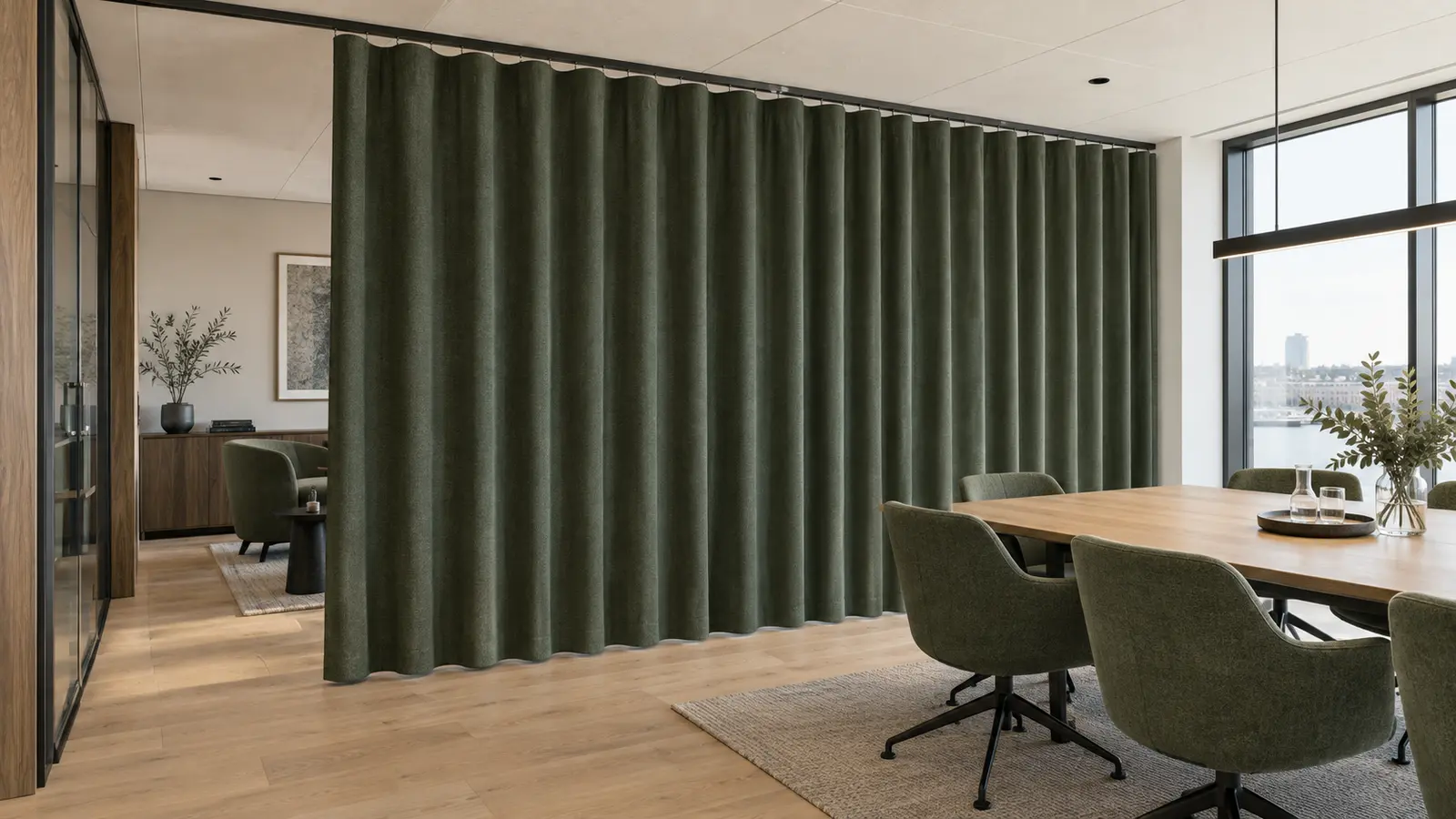
What acoustic textiles contribute
Curtains and other textile surfaces can absorb part of the sound that would otherwise reflect off glass, concrete and other hard surfaces. The result is typically a room that feels less harsh and more comfortable to talk and work in.
The effect depends among other things on the weight and construction of the textile, the amount of folding, the distance to the surface behind, and the total textile area. A heavy, folded curtain with air behind it typically contributes more than a thin, flat textile.
Curtains rarely solve the acoustics of a room on their own. Ceiling, floor, walls, furnishing and room volume are part of the whole — the textile is one of several instruments.
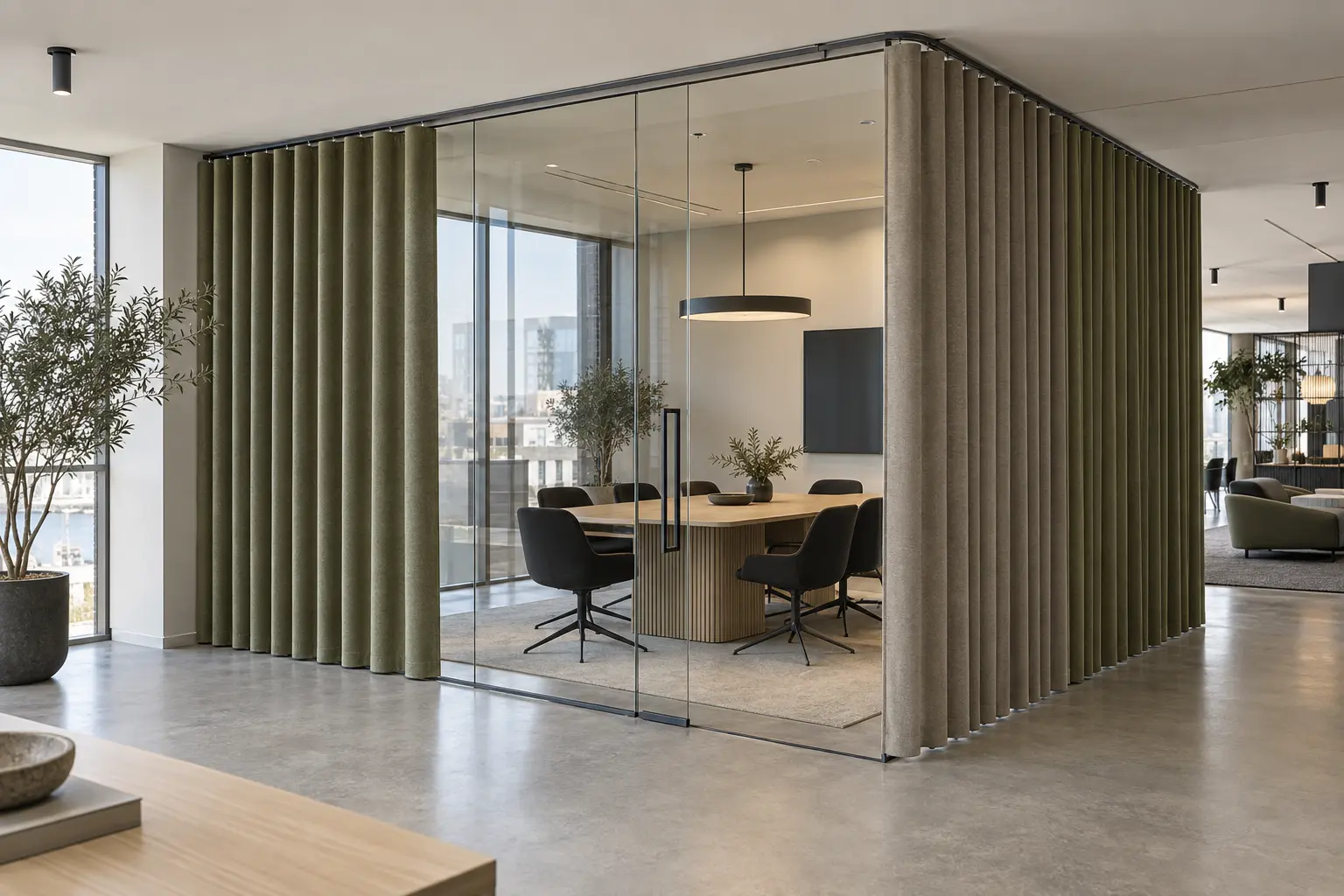

Typical applications
Acoustic textiles are used where reverberation and noise affect use:
- Open office environments with focus zones and meeting areas
- Meeting rooms with large glazed surfaces
- Foyers and common areas with hard surfaces
- Teaching rooms and multi-purpose halls
- Flexible zoning, where the textile both divides and calms the room
What we assess when choosing
- The weight, construction and documented properties of the textile
- Degree of folding and mounting — more folds and air behind mean a larger contribution
- Distance to glass or wall
- Total area relative to the size of the room
- Coherence with the room's other acoustic measures
- Fire requirements, cleaning and operation of the chosen quality
Documented requirements
Where the project requires specific acoustic values, documentation from manufacturers and relevant acoustic consultants is used. CIS Nordic does not promise an overall room-acoustic effect on the basis of a textile choice alone — we state clearly what the textile documents and what depends on the room as a whole.
Technical coordination
Heavy acoustic textiles place demands on track system and fixing. Track routing, load capacity, operation and any motorisation are clarified together with the ceiling build-up and the room's other services, so the solution both performs and appears calm.
The CIS Nordic role and next step
CIS Nordic advises on qualities, folding and mounting, coordinates with an acoustician where requirements are defined, and delivers the complete solution with documentation. Start with a conversation about the use of the room and the specific problems.
Frequently asked questions
Can curtains alone solve the acoustics of a room?
Rarely. Curtains can be an important supplement, but overall acoustics also depend on ceiling, floor, walls, furnishing and room volume. The textile is assessed as part of the whole.
When is acoustic performance documentation required?
When the project sets measurable targets for sound absorption or reverberation time. Relevant test data for the selected fabric and installation should then be considered alongside a room-acoustic assessment.
What affects a curtain's acoustic performance?
Fabric construction, installed fullness, the air gap behind the curtain and total area all affect performance. The same fabric can therefore perform differently depending on how it is installed.
Can acoustic curtains also be used for room division?
Yes, as flexible visual zoning. Heavy textiles on continuous tracks can create zones and reduce reflections, but they are not a substitute for an acoustic partition where sound insulation or speech privacy is required.
Do you have a project for us to look at?
Talk to us about the project, or upload the material for a preliminary estimate.