
Inspiration · Sector
Curtains and solar shading for educational institutions
Teaching requires light that can be controlled, rooms that can be damped, and solutions that stand up to daily use by many people.
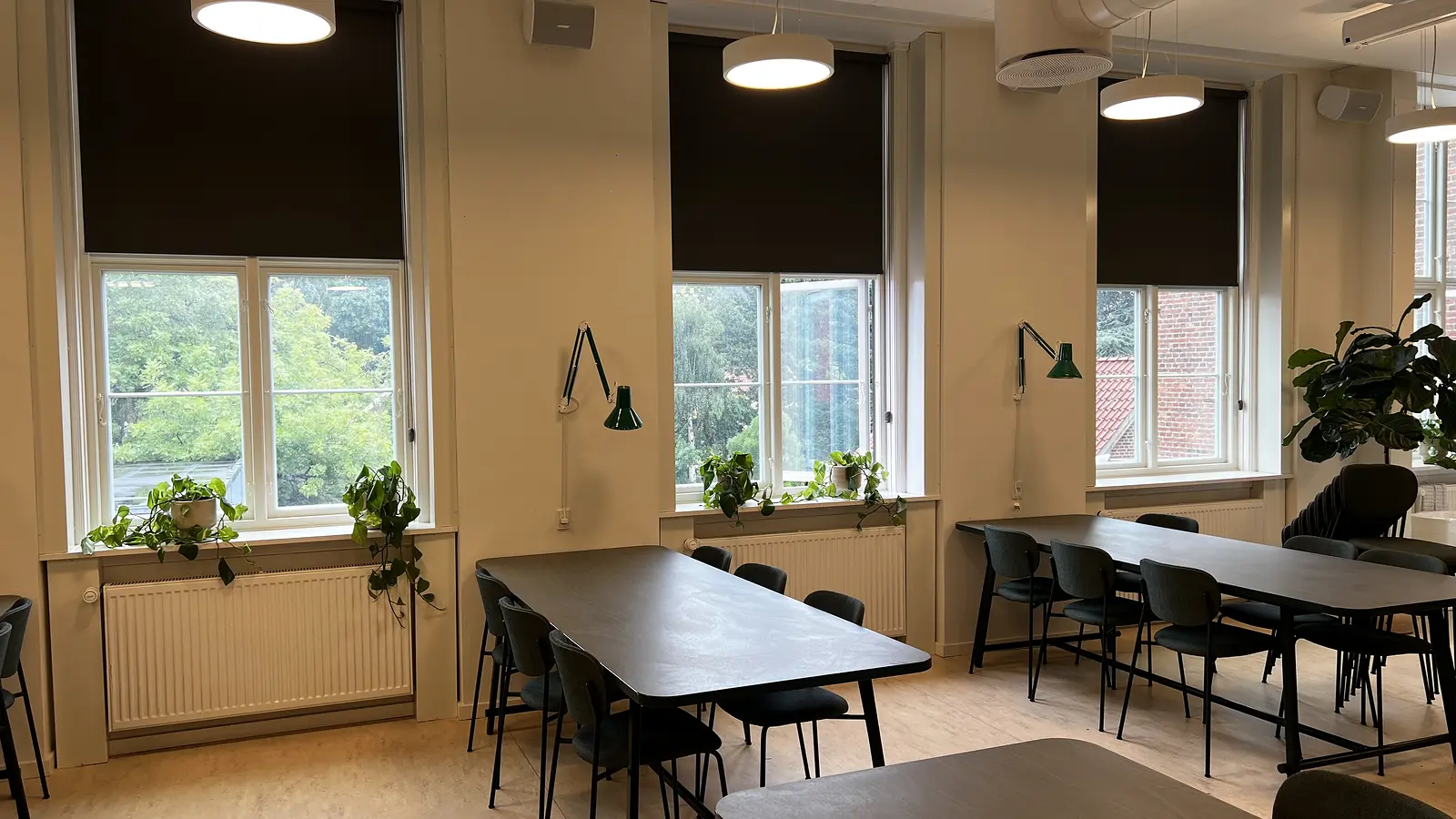
The needs of learning environments
Classrooms change function many times a day: board teaching, projection, group work and exams place different demands on the light in the same room. At the same time, the solutions are used by many different people and must therefore be robust and simple to operate.
Auditoriums and multi-purpose halls have stricter needs for blackout and acoustics, while common areas and study zones above all require glare-free daylight and calm. The institution's operations must be able to maintain all of it with limited resources.
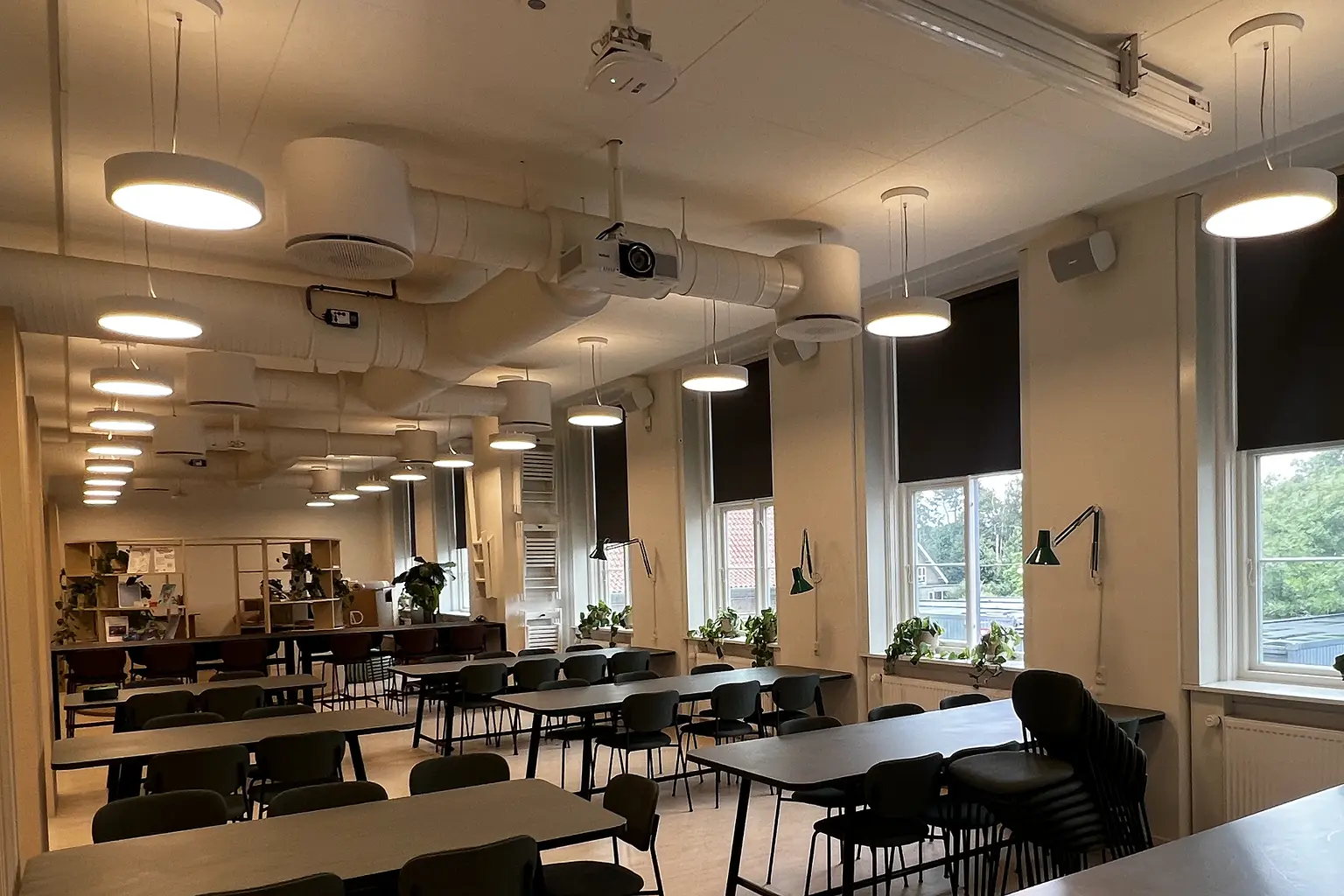
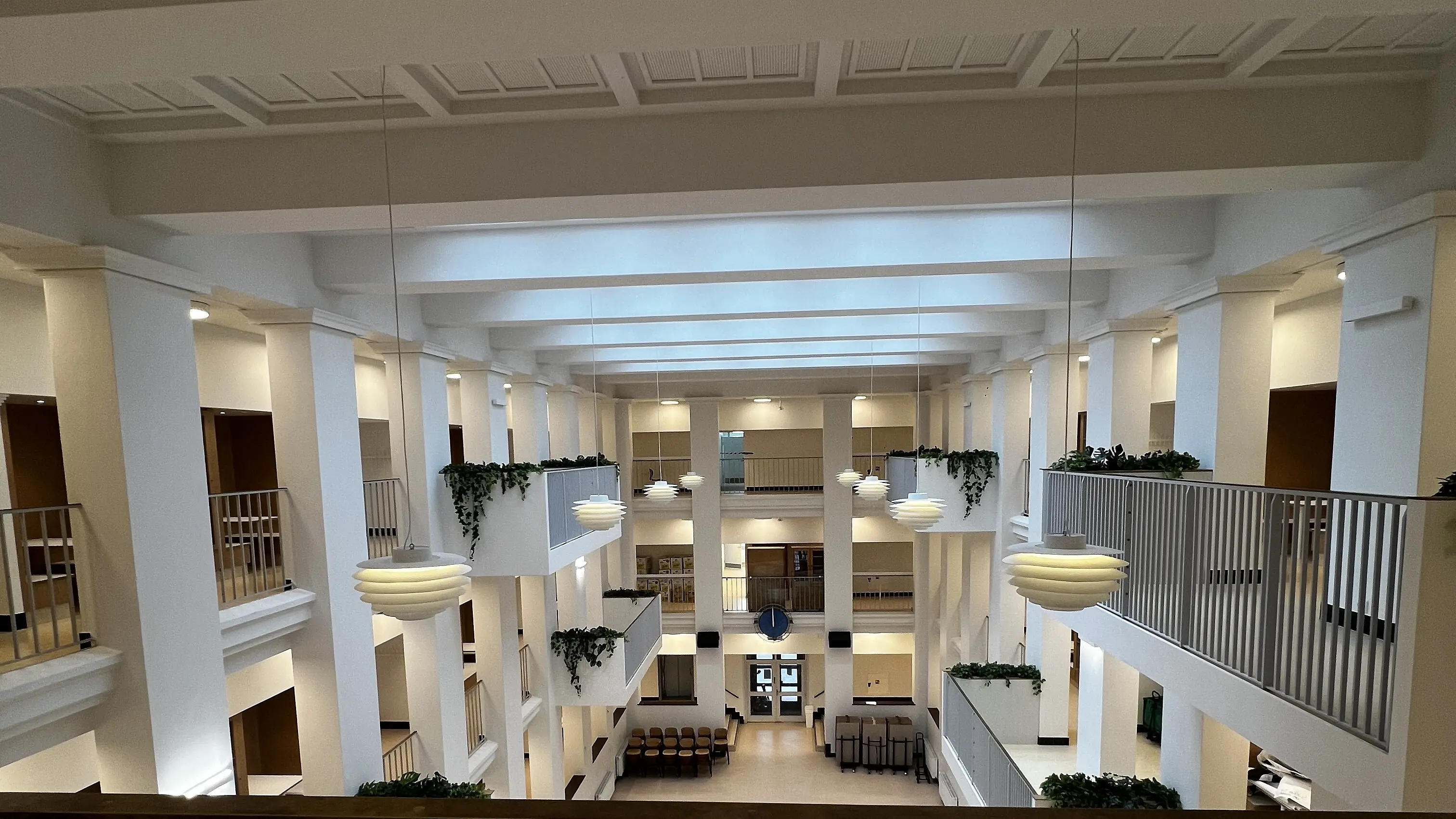
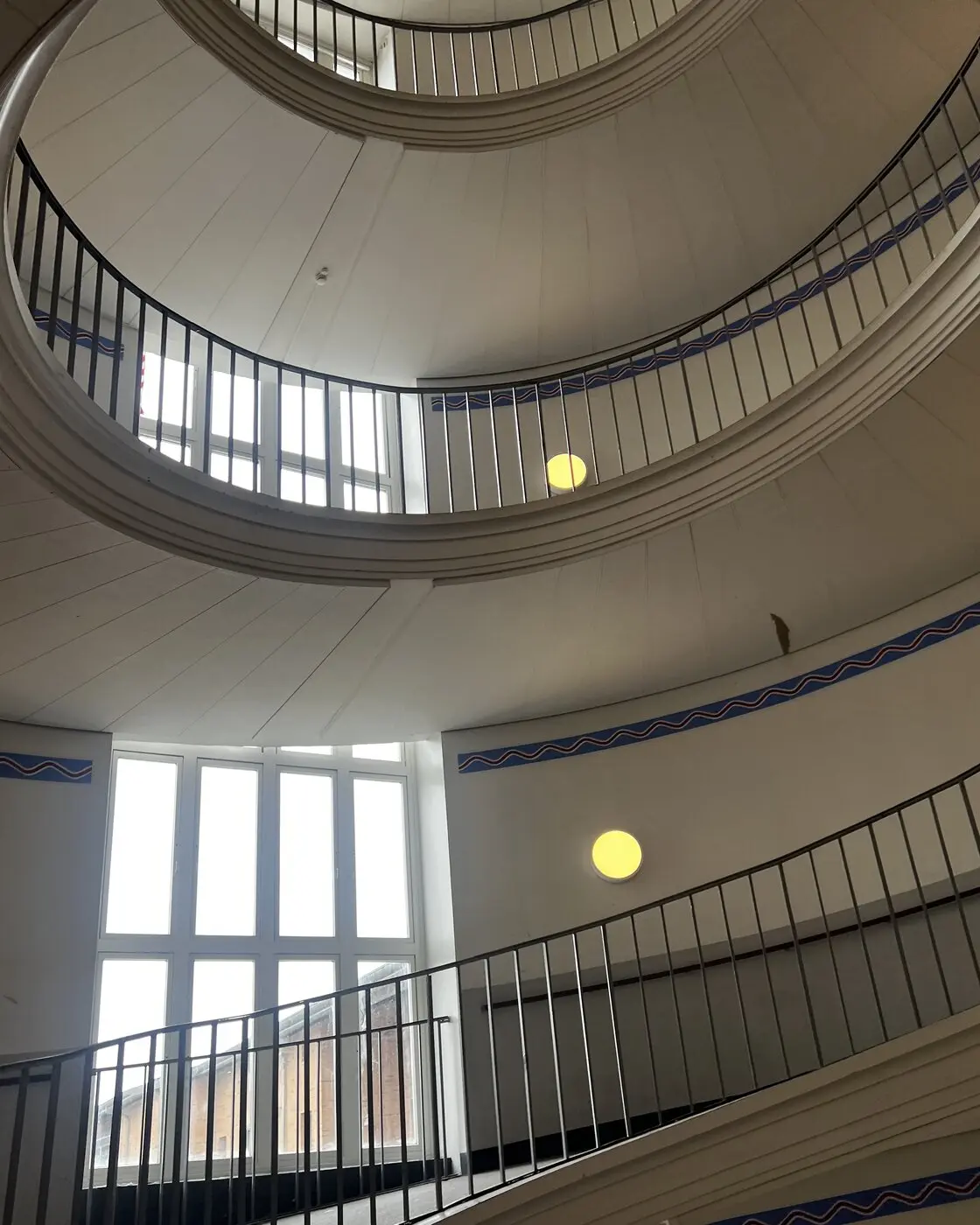
Relevant solutions
The most frequently used solutions in education projects:
Blackout
Projection and exam situations in classrooms and auditoriums.
Read moreScreens and solar shading
Glare-free daylight in classrooms and study zones.
Read moreAcoustic textiles
Damping in common areas, auditoriums and halls.
Read moreTrack systems
Robust systems for intensive daily operation.
Read moreMotorisation and control
Simple central operation of auditoriums and tall bays.
Read moreUpcycling
Assessment of existing textiles during renovation.
Read moreTechnical and project considerations
- Blackout level per room type — from dimming to projection
- Robustness and simple operation for many daily users
- Fire requirements and documentation for institutional buildings
- Track routing coordinated with ceilings, AV and services
- Installation coordinated with holidays and non-teaching days
- Budget frameworks and tender requirements in public projects
Operation and documentation
Educational institutions run many rooms with limited operational resources. Solutions with few wear parts, simple operation and unambiguous documentation are therefore prioritised: cleaning methods, intervals and reordering information are collected per room type, so maintenance can be planned realistically.
How an education project proceeds
- 01
Clarification
Room types, functions and requirements are reviewed from drawings and operations.
- 02
Solution and samples
Qualities and operation are assessed — ideally tested in a representative room.
- 03
Production and planning
Measuring and production are planned around the rhythm of the school year.
- 04
Installation and handover
Installation in non-teaching periods and handover with operational documentation.
Frequently asked questions
How dark must a classroom be able to get?
It depends on the use. Ordinary projection requires reduced daylight, while AV-heavy rooms and auditoriums can require full room darkening. The requirement is described per room type before the solution is chosen.
Do curtains stand up to daily use by many students?
Yes, when the fabric, track system and controls are specified for intensive use. Robust tracks, straightforward operation and durable fabrics are important, and wear components should be replaceable.
Can installation happen without disturbing teaching?
Usually, if access, safety and the schedule allow it. The work is typically planned during holidays, on non-teaching days or outside school hours, coordinated with the institution's calendar.
What about the acoustics in common areas?
Curtains can reduce sound reflections in common areas and halls. Where measurable acoustic targets apply, use relevant test data for the fabric and installation together with an assessment of the room as a whole.
Where to go next
Designing blackout
Article on requirements, light gaps and mock-ups.
Read moreSee all solutions
Overview of blackout, screens and acoustics.
Read moreBook a project review
Have the institution's rooms reviewed professionally.
Read moreExplore more environments
Design inspiration for offices, hotels, schools and public environments.
Read moreDo you have a project for us to look at?
Talk to us about the project, or upload the material for a preliminary estimate.